Wednesday, February 29, 2012

Have Pub Creds--Will Travel

Part of publisher guidelines usually mentions a short bio and publishing credits. How important are the credits? They can be very important to a small press who relies on a lot of author participation and a small in-place fan base. If they are major credits with large, prestigious publishing houses, or magazine stories or articles from major slick magazines, they can often be a tipping point if your manuscript is being seriously considered. If you have no pub credits, you certainly don't have to list them, and this usually does NOT harm your chances of consideration. Publishers and agents are pretty lenient about the lack of a publishing history, taking into account that many writers who pass over their thresholds, agent-repped or not, are new or debut writers.  We all have to start somewhere.

You'll have to consider what to list as reputable credits. For instance, it wouldn't be a good idea to list school or college assignments, unless you have a thesis relevant to your submission. Non-paying markets might also be a no-go. Newspaper articles, stories, and reviews might be okay, if the paper in question is a large daily or weekly edition. List any journalism experience, as a reporter or column writer.  The key here, is to list paid publications from semi-pro or professional sources. If you want to list non-paying small press articles and stories, you can do this, but it won't make an agent or editor snap to attention and salivate. Ghost-written books or deals with book packagers--sure, go ahead and list them. Anthologies are okay. Self-pubbed books? Go ahead and list them, but include some sales figures that are likely to impress. What are impressive sales figures for self-published books or story collections? Low end would be around 3,500 copies and upwards. Five thousand copies seems to be a normally accepted bell-ringer.

I usually list my publishing history at the end of my introductory letter. In fact, I always list it. Although my credit list is not large or very prestigious, it does give the publisher an idea, chronologically, what I've done in the past and what my recent sales indicate. I'll show my list and the different categories that I include below, just as an example. I've never been ridiculed for its formatting or subject list. It's always worked for me.


PUBLICATION HISTORY


BOOK CREDITS:
Auto Repair Shams and Scams (Forward--Ralph Nader), 1990, Price Stern & Sloan, Los Angeles--226 pages, non-fiction, consumer warning and repair book.
Garage Sale Mania, 1988, Betterway Publications, Crozet, Virginia--190 pages, non-fiction—1988.
Word Wars, a SF novel, to Rain Publishing, Canada—May, 2007.
Once Upon a Goddess, a Fantasy novel, to Rain Publishing, Canada—January, 2008
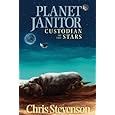
Planet Janitor—Custodian of the Stars, a SF novel sold to Engage Books, May 2009
Gate Walker, a Paranormal Fantasy, sold Lyrical Press—January, 2009.
The Lupus Strain, a fantasy thriller sold to LBF Books, February 2009

MAGAZINE—SHORT FICTION:
Stellar by Starlight, to Amazing Stories, 1988.
The Lonely Astronaut, to Amazing Stories, 1988.
Temperamental Circuits, to Gordon Linzner of Space & Time, 1989.
Things that go Clump in the Night, to Richard Fawcett of Doppelganger, 1989.
Dance the Macabre and Dance it Well, to Erskine Carter of Ouroborous, 1989.
Future School, to Chris Bartholomew of Static Movement, January 2006.
The Incredible Mr. Dandy, to Not One of Us.
Planet Janitor The Moon is not Enough, to Enage Books, 2012
Other magazine appearances from 1988 to 1991 include, Alpha Adventures, Small Press Writers and Artists Organization and Sycophant.

RADIO PLAYS:
The Summit, 15-minute horror play to Night Sounds, Embassy Cassette Inc, Santa Ana, California—1990
Night of the Moa, 13-minute horror play to Night Sounds, Embassy Cassette Inc, Santa Ana, California—1990.

AWARDS:
Finalist in the L. Ron Hubbard Writers of the Future Contest, for Temperamental Circuits, 1987.

JOURNALISM AND ARTICLES
350 newspaper profiles, stories, and interviews to Sunset Publishing, Anaheim, California, appearing in The West Coast Jewish News, The Senior Citizens Reporter, and The Military Review. From 1988 to 1991. I have sold three automotive articles to Dollar Stretcher Magazine, from 12-2-2011 to 2-28-2012.

CONTENT AND CLIENT
I have written and published over 1,500 non-fiction automotive, aircraft and marine articles for Demand Media Studios, under the Beta-Automotive and E-How stations, as well as other content and client assignment sites. 

ORGANIZATIONS/POSITIONS:
Served as content editor of Sunset Publication (see above) for three years. Responsible for all writing assignment content, filler and artwork, formatting and structural editing. 
President and founder of Heartland Writers Group, Huntington Beach, California, from 1987 to 1991.

AGENTS:
Past agent--XXXXXXXX, from 1988 to 1991.
Past agent—XXXXXXXX, from 2005 to August 2009
Present agent—XXXXXXXX

CURRENT FINISHED BOOKS (AVAILABLE):
Diane Nine and the Fusion Machine, a military espionage thriller.
Valley of the Mastodons, a non-fiction book involving the Ice Age megafauna discoveries in Hemet, California, during the Diamond Valley reservoir dig. Proposal, chapter outline, and 100 pages available upon request
Dispossessed Incorporated, an urban ghost fantasy.
The Omega Wars—SF, apocalyptic alien invasion (Sequel to PJ)
Screamcatcher, A YA fantasy
The Girl They Sold to the Moon, A YA distopian/SF set in the near future.

This is actually a pretty basic list, which covers a lot of ground. But here's a real good tip that many writers are unaware of:  look at the last section where you see CURRENT FINISHED BOOKS (AVAILABLE). These are very brief descriptions of finished, polished novels that I've had in my inventory. What surprised me the most, was finding that agents and editors who read and rejected the initial submission and actually asked to see one or a few of the books on my AVAILABLE list. On one occasion, this lead to a direct sale. On two other occasions, I received referrals, one to another agent and one to a publishing house. So if you have completed manuscripts (not partials), list them at the tail end of your publishing history. And it's kind of important to place your publishing history and bio in the body of the email--not as an attachment, unless otherwise specified.

Good hunting! 

Planet Janitor: The Moon is not Enough (Engage Science Fiction) (Digital Short) by Chris Stevenson (Kindle Edition - Feb 7, 2012)Kindle eBook

$0.00 
 (read for free, Join Amazon Prime)
Buy
$0.99 

Auto-delivered wirelessly

Monday, February 27, 2012

Does Internet Promotion Work?


Well, let's see.  I belong to the following writing groups, display, news and blog review sites.
Facebook
Twitter
Redroom
News Box                        
Chronicles
Absolutewrite
My Space
Booksie
Author's Den
Gather.com
Writer's Forum

Bebo
Writsite
Amazon
Book Place

Shelfari
Fanbizz
Web wire

Writer's Corner
Click Press
NotchUP
Writing.com
Traffic Swarm
Writer's Net
Ink Drop
We Do Write 


 Those are the ones that I can remember off the top of my head.  I've been at most of them for several months, if not years.  I've had five novels see print, and have listed them with most of these sites.  It's so difficult to remember all of my passwords and usernames that I've had to keep a hand-written spread sheet handy just so I could keep track of where I've been and where I have to go, and if I can ever get back in to update my information.

I'm the first one to admit that I can't physically attend to all of these sites and keep them up-dated.  I wouldn't have enough hours in the day to handle three or four of them alone.  I network as best I can and contribute when and where I think I'll get the best exposure and results. The reader population from all of these groups most certainly is in the hundreds of thousands--maybe even the millions.  It's hard to say--they're growing every day with the influx of new members.

Here's my rant and my point.  Having had these books online, some for many years, I'm not certain if all that exposure and labor in attending to massive online promotion is having any great significance in sales. It appears that the first purchasers are family and friends, and they might pick up about 75 to 100 copies. Then the book flat-lines.  I think it can truly be said now, as I've heard resolutely from my writing peers, that display sites (YADS) are nearly worthless for marketing and promotion.  Friends, the only way you are ever going to sell print books is if they are in real brick and mortar stores, stacked on the selves.  Period.

That is unless you are aspiring to become an internet whore and spend all of your time in these electronic gulags.  And if you do that, tell me, will you ever have time to write a single word of fiction or non-fiction ever again?  I've made tons of friends, been proposed to, and found long-lost loves on these sites.  Yet it's doubtful I've made more than a handful of sales to these people, and if I have, I don't know where they came from.


So, if anyone ever tells you that the internet is the place to sell books (with the exception of E-books), ask them where they got their information.  Just after a recent and in-depth survey, I discovered that the best Amazon.com numbers came from publishers who had distribution and bookstore presence, and garnered reviews from pro publications like Kirkus, Publisher's Marketplace, and Library Journal.  Book stores still outsell the internet when it comes to mass-market paperbacks, trade and hardback books. 

Tip of the day: Before you even think about advertizing your first published book anywhere on the internet, make sure you have a blog or website in place that has several thousand page reads per day and hundreds of subscribers. That home audience can likely get the ball rolling for you by word of mouth, and account for several hundred book sales.  

Mini-rant over.  Lesson learned.

Planet Janitor: Custodian of the Stars (Engage Science Fiction) (Illustrated)


Sunday, February 26, 2012

Publisher Hype and Fraud

Prepare yourself for a mini-rant here. This subject has always bothered me. I think the more years and rejection slips you have, agented or otherwise, has a lot to do with the intensity of your feelings. I've got 23 years invested in this craft and business and nothing really surprises me anymore.
  
We have to go no further than the three examples below to understand how single-minded and obscene the publishing industry can get, when all it has in its sights is gimmickry, fraud, hype and commercial greed. These cases represent but a small fraction of what is taking place in the industry today. But It's irrefutable evidence that when there is no talent or celebrity status, you have only to create it, label it, ship it and cram it down the gullible throats of the populace. Though these incidents took place some time ago, they will forever remain fresh and seared upon my mind as if by a branding iron. I will never get over the negative impact they have had upon my own career.

Sweet, marketable, young, beautiful and born out of a foreign heritage, Kaavya Viswanthan burst on the scene as a teen queen of chic lit, with How Opal Got Kissed, Got Wild, and Got a Life. Alloy Entertainment figured they could package this girl (I said girl--not book), and sell her to Little Brown for a hefty $500,000 advance. The advance was all hype, by the way--it was much smaller. Film rights went instantly to Dreamworks, who bought the film rights for a book that wasn't even out yet. Sometime during the planning and marketing stages it was discovered that the book was heavily plagiarized, almost line by line in dozens of passages, including the plot and theme. I'm dismayed by the fact alone that an 18-year-old girl nearly got millions for a book (or two) that was her VERY FIRST attempt at writing genre fiction. She paid no dues, suffered no rejections, and certainly had not honed her craft to deserve such accolades. It seems that quality writing was the publisher's last consideration upon garnering this deal.

James Frey's A Million Little Pieces was also found to be hype, lies and exaggeration. He fooled the NYTs bestseller list for 44 weeks, and Oprah Winfrey, when she made it a # 1 book club selection. Proof once again that sensationalism sells--the more outrageous, the better. Sorry. It just ended up too good to be true for its own good. His supposedly true story did not ring true, upon investigative research. They canceled production and pulled it from the racks. Strangely enough, Frey has gone on to sign more contracts with different publishers and has landed on the bestseller list once again. I'll be damned. If you lie and cause great controversy--you can obtain one hell of a writing vocation and end up an A-list celebrity. That's how it's done.

Christopher Paolini's Eragon is another such hunk of hack squat--totally derived, unoriginal, borrowed, and pitifully boring. This book is not fraud as much as it is hype and sizzle. They sold the "kid" Christopher, hoping that America would embrace this child prodigy and, unfortunately, a huge segment of the YA reading world took the bait. The book was edited by his parents and vigorously promoted at great expense and fanfare. Recent estimates are that the book has sold about 8 million copies. This kid has nothing on Terry Brooks. He is but a wad of gum under the shoe of Neil Gaiman, and Pratchett is light years ahead of him. In fact, he would be hard-pressed to eclipse any one of the very capable epic fantasy writers in my writer's group.


One of the Most Recent Cases:

The publisher of a novel about Edgar Allan Poe’s child bride defended the book against allegations that its author, Lenore Hart, lifted material from another work about Poe’s young wife.

St. Martin’s Press released a brief statement Tuesday saying it had compared Hart’s “The Raven’s Bride” to Cothburn O’Neal’s “The Very Young Mrs. Poe” and found any similarities limited to the inevitable overlap of two novels covering the same subject: Virginia Clemm, who married Poe when she was 13 years old.

 There are dozens more examples on Jeremy Duns's blog. Duns, if you'll recall, was one of the authors duped by recently-exposed plagiarist QR Markham (Quentin Rowan) for his cut-and-paste novel Assassin of Secrets.

 I'm nearly at the point where I don't trust BIG publishing anymore. I think their marketing departments (the bean-counters) ought to relinquish custody of talent and purchasing power right back to where it used to be--with the editors.

Turn me over, I'm done.

Friday, February 24, 2012

Writing and Marketing Woes

I should have said "pleasure" instead of woes.  But it sure can be tedious at times, multi-tasking, writing new material, banging out edits on mulitple books, trying to stay updated with your agent and marketing your Bermuda shorts off.  I wonder when I'll take a break at times, but that inner life-clock of mine keeps on ticking and taking little snippets of juice out of me.

I think I've spammed the world, but the world is snoozing.

I don't take breaks, and I guess therein lies the problem.  For the past six years it's been eight to twelve hour stints at the screen, with no let up and no vacations.  I never leave the house, except to do chores, and even resist going out in public, knowing that my time is better spent splashing ink.

This is the toughest mental vocation I ever got myself locked into.  And locked is the correct term.  It can be like a self-imposed prison.  Honest to God, I can't see how anyone has the time or energy to write when they have a full-time job, kids, and a loving spouse who requires their attention.  I'm glad I'm single.  I'm lonely, oh yes, but I wouldn't  put a household and loved ones through the mess that is my life.

Dear writer: take a well deserved break now and again. You need to recharge your system, gather your thoughts and organize your portfolio. Approaching the brink of exhaustion, does not a happy writer make. I'm starting to take walks now. Even a visit to the grocery store is a welcomed change of scenery. You have to let your mind experience alternatives. 

Loving rant over...
Chris--red-shifting.

Planet Janitor: The Moon is not Enough (Engage Science Fiction) (Digital Short) by Chris Stevenson (Kindle Edition - Feb 7, 2012)Kindle eBook

$0.00 
 
 (read for free, Join Amazon Prime)
Buy
$0.99 

Auto-delivered wirelessly
 

Planet Janitor: Custodian of the Stars (Engage Science Fiction) (Illustrated) by Chris Stevenson and Toni Zhang (Kindle Edition - Jan 7, 2011)Kindle eBook

$0.00 
 
 (read for free, Join Amazon Prime)
Buy
$2.99 

Auto-delivered wirele
 

Thursday, February 23, 2012

Thinking About Giving Up?


If you're thinking about giving up on your book or writing, consider this letter I wrote to a friend:


"Dear One, I've been close to packing it in myself. And I'm repped! Nothing has come easy for me it seems--a struggle all the way up that hill. I know you've been trying to snag that dream agent, and the odds are just so crazy. I know that POD small press is distasteful to you, as it is with a lot of us. But there are some gems out there that I think you should at least try--give it a shot. (Honest, I think I'm becoming the king of small press lately).


Gawd knows publication with the smaller outfits won't give you that mass-market paperback deal you've been looking for. Dawg knows that you won't get a thread in your favorite writing group, praising you for your accomplishments to the high heavens, nor hundreds of members buying your book. But what it will give you is vindication that somebody, anybody, read your book and loved it--believed in you--believed in that story. It's all about positive reinforcement--that drive to keep you going, pushing for that next step.


Just taking one example: I landed my agent with Planet Janitor, a SF survival tale--kind of a cross between Robison Crusoe on Mars and Starship troopers. Oh, did I have high hopes for that one! We spent months hammering the plot, polishing the prose. After it went through two rounds of agent subs over a year's period without selling, I was totally crushed. I thought this was the end.


Until I sent it out. 


Three editors at one small publisher loved it and requested minor changes. Contract came. I got an advance and a wonderful contract. I thought it was fluke. I kept thinking author mill. It was later that the publisher came under some terrible discrimination. So I voided the contract but kept the advance. I sold it again to a larger e-pub/print publisher. Two editors there said they loved it. When I tried to work the contract in my favor they wouldn't budge. So I pulled the book from them.


My final sale was to a newish pub house that specialized in SF. They praised it up one side down the other. The CEO shared the manuscript with a "name" SF author. Yep, done deal. This was a hot one. They wanted some minor changes--which I made happily.


That was not a fluke.


My point is, eight readers people couldn't be wrong. Nine, including me. The big houses probably cut me off at the knees at the synopsis stage or the first chapter. I was dismissed out-of-hand. But I'll tell you something very important I learned; I knew that my instincts were right all along. I had something very special there, but for whatever reason, those big name houses didn't catch it, couldn't see the potential. Bad timing, bad luck, bad breath, the stars out of alignment, some damn evil force conspired to get me and hold me down.


I think you need to so something similar for YOU. And I have to admit that handing out rejection slips to publishers sure did something for my ego.


I'm reminded of another writer, and the hassle she went through trying to find a publisher. She had a memoir that just had to be told. It seemed like it took her forever, but she finally landed with a respectable publisher and turned the small press on its ear by selling more books than anyone expected. Wonderful reviews, TV and radio spots followed--it all came into place for her. I'm positive that she never regretted that decision. A great story will find its way to the readers, in spite of all the obstacles.


But that means you can't give up on it. Listen to your heart. Screw the establishment."


FWIW,


Chris


Planet Janitor: The Moon is not Enough (Engage Science Fiction) (Digital Short)


Planet Janitor: The Moon is not Enough (Engage Science Fiction) (Digital Short) [Kindle Edition]

Chris Stevenson

Digital List Price: $0.99 What's this?
Prime Members: $0.00 (read for free) Prime Eligible
Kindle Purchase Price: $0.99

  • Includes free wireless delivery via Amazon Whispernet

Wednesday, February 22, 2012

The Uphill Climb For The Male Writer

The following questions and answers were derived from the portion of an article about Nat Sobel, the literary agent. Credit goes to Jofie Ferrary-Ader as the writer.

Interviewer: "People in the business talk about how eight out of ten readers, or whatever the number actually is, are women. I think it's very difficult for young male writers to get published, especially today. I wonder what you think about that and how you've dealt with that in your career."

Sobal: "I certainly think it's very difficult for male writers who are not writing thrillers. They have a much tougher road. We've read a number of pretty good novels by male writers that we know just won't go. Male coming-of-age novels are impossible to sell. We've already talked about how it's getting more and more difficult to sell fiction. Let me give you a better picture of it by looking back on last year. Five of us in the agency read submissions, everyone downstairs and Judith and myself. Five of us. We have an editorial meeting on Thursdays. I never talk to Judith about what I've read except at this meeting so it's all fresh for all of us. We generally read partial manuscripts, or complete manuscripts. Everyone averages about two of those per week. So, in an average year, that's more than five hundred manuscripts. Last year, from those five hundred books, we took on three new writers. And we were only able to sell one of them. Remember that much of what we get is from writers I've written to after reading their stories in the literary journals?we get very little over the transom. So look at those odds.

They're very tough."

Interviewer: "Damn right. We've spent a lot of time editing through second and third drafts and finally abandoning books because we don't think we can get the writer up to the level we want. We have to give up on them. Occasionally those books will get published too. But the odds are really difficult, and for the male writers it's even harder.

Is there anything they can do to make their odds better?"

Sobal: "I'm always looking for the unusual. I think it may require writing something of a historical nature, with a historical setting. They have to be able to get an idea of what's on the best-seller list today and see that, outside the thriller genre, there aren't too many male fiction writers who are succeeding. And I don't think that's going to change for a while."

"But isn't that troubling?"

"Sure it's troubling. I think it's troubling for all literary fiction writers today. But particularly for the male writers, who are only gradually becoming aware of how limiting that audience is. But I think you can find good male writers who can write from the woman's point of view, too. I remember a first novel I sold years ago. The writer himself was in his early thirties, but the novel was a first-person novel from the point of view of a sixty-two-year-old woman. It was entirely in first person, and it was a terrific story. It began his career. So if a male writer can write from the female point of view, or has a story that will interest a woman's audience, I think he has a better chance than somebody who's writing the kind of Hemingway-esque stuff we read in school."

                                                     #                      #                    #

Given the fact that the largest reading and purchasing group are women, this is not surprising at all. Sixty-five percent of all books purchased are by women. I think women might account for as much as 70% (my high figure) of the entire fiction reading public. Most of these new releases are penned by young women--sometimes, very young gals, as is the case with YA titles.

This is not sour grapes and I'm not intending to start a gender flame war. But the fact of the matter is, is that the male debut novelist is becoming somewhat of a literary dodo. Due to best-selling current trends, urban fantasy, paranormal romance, and YA in all of the sub-genres, we're finding that female writers have really staked their claim out in these areas and their readership is almost entirely other females. This is not to suggest that there are no male writers who've published in these genres—just fewer of them.

Truly, I had to give up SF for the simple fact that nobody, and I mean nobody, was buying it, other than the well-known trade publishers, who signed with established name authors in the business. SF, as we all know, is predominantly penned by male writers, except for the new emergence of SF romance. There are some wonderful females SF scribes out there, but how many debut female authors are writing hard SF or space opera?

Nat claims that males might have their only chance in the niche of thrillers. I think he used a rather wide brush with that comment.  But consider this: the NYC houses are run by nearly all female editors and, young ones. This is not to say that their thinking is collaborative. But from a psychological standpoint, it is not very hard to understand that a female editor is less likely to be endeared to a male MC written in a male voice--and it has nothing to do with preferring one gender scribe over another. Gawd knows there are exceptions, and some male-centric books get through and go on to print. But the majority of us guys are not writing the real popular genres, the ones that are really taking off. We have some dynamite male romance writers, but I can count them on one hand. That's if you get past their pseudonym.

Let me make this clear: I'm not talking about midlist or bestselling male authors who are appearing on the NYT list, or who are great backlist sellers. I'm talking about debut authors in the past three years. Just exactly where are the contracts going? That's my question. I've had J.K. Rowling thrown up in my face for evidence that this just wasn't true, since Harry was a male lead, and the series has been the most successful in popularity and sales ever. But I am talking about adult fiction--not YA. YA fiction is seems to be a very strong suit of female authors. And HP did start out essentially as Young Adult.

I also believe that Joe Konrath, writer of the Jack Daniels mystery series, might not have been published if not for the fact that he made his MC a female detective, and scratched his male name from the book's title. Correct me if I'm wrong, but wasn't that his agent's suggestion? What does that tell you? He admits to failing to sell nine books prior to his popular JD series. (He's a wonderful writer, by the by)

I know of some publishing houses that state implicitly that there will be only female leads used in the storyline, and that sex and romance must weigh heavily in the plot. Juno is one of them.

Techno Books (The packager) announced that it is discontinuing their entire spec fiction line. They are leaving only mysteries open for submission, plus their Impressions line--which is all romance, covering all sub genres, including paranormal and fantasy. Now, does that make sense? Once again, evidence of a major industry shift. There's no question that readers rule, and the readers are women. BTW, women rule too!

I've always heard and believed that if you write a great, compelling story, it will find worthy publication. And this is true, and women do admit to reading a ton of male-oriented books. So what's really changed? I'm going to toss this one on the bean counters--marketing. The demographics support the math. There are exceptions. But you must provide content to the largest reader purchasing group, and publishing is, first and foremost, a business that must make a profit to carry on, produce and distribute a literary product. 

What have I learned? The only control I have over this is to employ some empowered females in all of my stories from here on out. I sincerely believe Nat when he says that the male writer will have to learn how to effectively write female lead characters into his storyline if he is to better his chances for publication. I've done this, and I really enjoy the transition. My betas are almost exclusively females, who can help me address real emotions and motivations in the YA or adult female lead character. I need that direction and help. Breathe some life into some intelligent, independent, and believable females and give them some spotlight in your story lines. And guys, we really need to brush up on how to write convincing and erotic sex scenes.

Guys, times have changed for the better. More people are reading books than ever before. Adapt and enjoy the process.  


Planet Janitor: Custodian of the Stars
Chris Stevenson, Toni Zhang
Kindle Price: $2.99


Tuesday, February 21, 2012

For The Agented Among Us

To avoid a break in an agent/author relationship as a result of a book not being picked up by a publisher, it's highly advisable that you're busy on your next title the minute your agent starts the shopping process. If you time it right, you'll have that next book written and polished by the time the first book has exhausted all leads. If you're a solid producer, there is no way an agent is likely to drop you. A book usually wears out on the submission trail from nine to twenty months. That's an approximate. In my case, 18 months is about the death toll, but there are agents out there that will champion a book for several years. DO NOT SIT ON ONE REPPED BOOK, WAITING FOR A SALE.

One snag...

To make sure that the agent is going to look favorably on your next book, I usually write the synopsis and first three chapters and send them to him and ask if this is something that he might be enthusiastic about. In other words, it has to ring his bell. I do this as a precautionary measure. My agent will take many things into consideration--if there is a market for it, if it has a good concept/premise--that all important hook, and so on. You don't really have to send the first three, but I would run the idea by him and ask for a yea or nay. Agree to hit on something that gives both of you the happy shivers.

There is nothing more devastating than writing full tilt on something, spending six months, and then having your agent tell you that it isn't going to fly. Your agent has to fall in love with it too. I had this happen to me. Fortunately it was a trunk novel that I brought out of moth balls and reworked. He still did not like it. That's one that didn't get through the gate.

Hint: Ask your agent what's hot out there. What are they looking for? What stands the best chance of being picked up? Where are the open slots? If he/she has an idea or solid opinion, and if it falls within your genre parameter, and you've got the voice/style to carry it off, go with it. You don't have to do this--it just ups your odds. I'm not saying to hack it and write outside of your box. I'm saying to discuss a genre switch with your agent. They have their pulse on the trends of the marketplace. Sorry, I'm not a real fan of writing whatever the hell I damn well feel like. I'm not out to entertain me; I'm out to entertain the reader--all of them I can get. I know what you've been told by your peers, but I think that will work for you in an agent-less situation. I'm sure you've heard, "Write what you love." This can work very well, since these books are often written with the most passion and purpose. But if I've been doing that for three years without success and my agent suggests I switch genre gears, then I'm going to listen. I always thought I was a capable science fiction writer until several agents and editors told me I excelled at action/adventure. So now I just put a lot of action in my paranormal romance and thrillers.  

As far as agents dumping clients. I don't see a lot of that happening. What I see more is writers getting frustrated with their agents and dumping them. Case in point: I've been with my agent for 22 months. From the beginning, he had 29 fiction writers in his stable. Today he has 25. The evidence shows that three of those writers left him. He dropped the other client for personal reasons. He also represents a dead author, who started out with him at the very beginning. He made a vow that he would continue to champion that book out of respect to the estate. And, of course, he's wild about the book. Now, THAT'S diehard service going above and beyond the call of agenting.
 

You're going to get genre "niched" whether you like it or not. I don't even think that's a word. Your maximum sales potential will come from a fan base that is launched from your first book. If it does even respectively well, you'll be encouraged to stay there, for strictly marketing considerations. It will do you no good to write all over the genre topography and hope that one of those books hit, unless you're switching genre gears. Your agent will know where your strengths lie and tell you so. You have only to ask. When your last name is King or Koontz, you can play all over the sandbox if you like. Until then, try, try to specialize.

At the behest of my agent, I dropped science fiction. The market was just too tight for us to make a debut splash. I had that same problem when I was repped by another agent 18 years ago. So I slid rather comfortably into paranormal thriller/romance and urban fantasy. The result has been that I'm getting about 35% more full reads in that category. My agent was right. I upped the odds. The transition wasn't hard--I love words anyway, and it's still spec fiction. I'm strong there--I feel it and I know it.

Don't irritate your agent with trivial or non-business type communications. Unless you're really best buds. Successful agents are REALY BUSY PEOPLE. I check in about every three weeks--sometimes a month. That's unless you're doing rewrites or hammering out a contract. New repped writers have a tendency to suffocate their agents with needless questions and pestering. Give 'em some breathing room, and everything should fall into place. Contrary to popular belief, your agent hasn't forgotten about you. They are really dying to send you that all important publishing offer-contract. You know the one you've been waiting for all your life? 


Planet Janitor: Custodian of the Stars (Engage Science Fiction) (Illustrated)


Planet Janitor: Custodian of the Stars (Engage Science Fiction) (Illustrated) [Kindle Edition]

Chris Stevenson , Toni Zhang

Digital List Price: $2.99 What's this?
Prime Members: $0.00 (read for free) Prime Eligible
Kindle Purchase Price: $2.99

  • Includes free wireless delivery via Amazon Whispernet

Sunday, February 19, 2012

POD Publishing Gone Horribly Wrong

What can I say about my publisher, XXX Books, who have just closed their doors?  Not much of any good.  The warning signs were there but I chose to ignore them.  What were they?
(Note: This incident happen six years ago, but still applies today)

*  XXX Books had a non-negotiable contract from the start.  My agent could not get them to budge on one item.
*  They paid no advance.
*  They paid 12% on NET royalties.
*  They barraged the author with self-promotion emails, tactics and rules.
*  They required a friends/family/relatives list for the initial sales push, identicle to Publish America's spam campaign.
*  They lied about having two dozen book stores as partners. 
*  They had zero distribution--they sold from their website exclusively for three years before they made the step to Amazon.  Then the books became unavailable via 'out-of-stock' notices to Amazon.
*  Retail book prices were as high or higher than the worst vanity printer on the internet--Publish America.  They even surpassed hardback prices.
*  Postage costs of the books from Canada made sales prohibitive, and sometimes were higher in cost than the books themselves.  It was only until the end of the company where the postage cost was reduced to a flat five dollars per title.
*  My royalty payments rolled over each quarter.  I was never paid a dime for both books for over a year, and have not been paid to this day.
*  They claimed to use offset technology, with first print runs of 1,500.  They lied.  They were POD all along.
*  Review copies were never sent out.  This was after 60 copies were requested from major review sources (in my case).
*  There was no fundamental or content editing whatsoever.  The editing that was provided was done by amateurs, who left literally hundreds of mistakes in the text.  The editors were paid by credit/byline only.
*  The book formats were atrocious--wraparound text, breaks, sentence omissions, paragraph and chapter misalignment, wrong font size, ragged right hand margins, etc.
*  Author self-purchase emails and notices were sent regularly.  The author's discounts were the lowest ever seen in the industry--20% at first, and then later 30%.  Until the blowout closing sale of 50% off.
*  No ARCs or galleys.  Straight PDF dump to the printer.
*  Sub-standard clip art.  Your front cover was NOT negotiable.  Your suggestions were all but ignored after your first complaint.
*  Late or no delivery of books.  The U.S. postal service was blamed for missing books or late books.
*  No promotion, marketing, conferences, festivals, show attendance--no effort to sell to the outside markets was evident.
*  Authors were continually berated for failing to self-promote.
*  Email threats.
*  Lies about car crashes, family and personal illnesses.
*  Claims that bookstores were the least favorable place to sell books.  The internet was stressed as the premiere sales source.
*  Zero trade reviews--Booklist, Kirkus, Publisher's Marketplace, NYT.

IN MY ESTIMATION, XXX PUBLISHING OF CANADA SURPASSED THE UNSCRUPULOUS TACTICS OF THE WORST PUBLISHER ON RECORD IN THE INDUSTRY--PUBLISH AMERICA. OVER 30 AUTHORS AND 70 TITLES WERE DUMPED.  MANY SERIES WERE CUT IN HALF, LEAVING UNPUBLISHED SEQUELS, AND AUTHORS SCRAMBLING TO FIND OTHER PUBLISHERS/PRINTERS.

Folks if you think this case is exclusive, I beg you to evaluate every contract you get, and do the required amount of research about any small press publisher that uses the POD model. There are more than a few bad eggs out there. Today anyone can hang up a publishing shingle. It's better to not be published at all than to be published poorly. Remember: Money Always Flows To The Author. 

Planet Janitor: The Moon is not Enough (Engage Science Fiction) (Digital Short) by Chris Stevenson (Kindle Edition - Feb 7, 2012)Kindle eBook

$0.00 
 
 (read for free, Join Amazon Prime)
Buy
$0.99 

Auto-delivered wirelessly

Saturday, February 18, 2012

Small Press Distribution Woes


Below are the (general) requirements for a small press that is seeking distribution:


  • A copy of your best-selling titles (or artwork, page spreads or galleys for books in production)
  • Complete title list with backlist and any upcoming publishing plans
  • Sales history of each title, including original pub date, sales Year-to-Date and previous year, Lifetime sales,
  • Available Stock and Location, and sales projections of future titles
  • Marketing and publicity plans, including copies of recent advertising and reviews, and marketing plans and budgets for upcoming titles
  • Current catalog, if available
Never mind the cost to the publisher, which can be substantial and based on a per title account, it is these points that discourage 90% of all small press from EVER obtaining meaningful distribution.  First they have to list their best sellers, and that means that they've hopefully sold something that might break the four-digit threshold.  Not likely.  It is most likely they will manage two-digit sales from internet presence only, and possibly three-digit sales if the author has gone out and performed speaking engagements, books signings, and hand-to-hand physical sales.

Determination:  They won't qualify.

They better have a healthy backlist that proves they've been doing this for a couple years.  We're not talking about three or four books, nor reprints of public domain classics. 

Determination:  If they don't have the stock--they won't qualify.

The original pub date, sales Year-to-Date and previous year, lifetime sales, of every single title can be a very embarrassing disclosure.  A house might have one copy that has sold 1,200 copies in three years, believing this to be their ticket to distribution, but if the rest of their backlist has average total sales of 45 copies (each) sold in three years, the chances or slim to none they will be picked up.

Available stock means just that--warehoused books.  That equates to offset runs, or very high initial POD runs (right from the gate).  Extremely unlikely with POD publishers, and that's just about all you see out there who call themselves small or independent publishers.  Expense is the culprit.

Determination:  Will not have sufficient inventory:  Will not qualify

Marketing and publicity plans--it's possible that a small POD press might have some ideas, tricks and gimmicks, but it is extremely unlikely that they will have any record of advertising dollars spent, or any real legitimate industry reviews.  Expense and credibility (sources) are the culprits in this example.

Determination:  Won't qualify.

They better have an up-to-date HARDCOPY catalog, preferably a color one.  Sadly many of them don't.

Determination:  Won't qualify.

Folks, these are just some of the bare bones requirements for simple, relatively economic distribution.  The chances that your POD outfit (publisher) has a distributor is very unlikely.  Which will mean NO bookstore placement. Fulfillment distribution is the least acceptable route for a small press, which costs less than the full package that has a sales force that actually visits and pitches to independent and chain book stores.

Publishing today is black and white.  There is no such thing as a medium-sized publishing house anymore, aside from a few (POD) exceptions that manage to garner respectable industry reviews, produce sizable print runs and sell copies in the thousands  .  Either they have distribution or they don't. It's the difference between selling 46 copies and 4,600.  It's as simple as that.  Sadly, if you don't have an agent batting for you and sending your manuscripts out to the majors, you will be inclined to accept contracts from the smaller guys.  Good luck.  Your only recourse then is to work/negotiate the contract until you feel comfortable with the deal.  You'll be hard-pressed to get an advance, but it is possible.  Anything is possible.

Good hunting.

P.S. three words have always defined legitimate publishing for me:

MASS-MARKET PAPERBACK

See if you understand the reasoning behind this.  It leads to a complicated but understandable formula, which leads right back to distribution status.

Friday, February 17, 2012

The Agent Comfort Zone

Are you afraid of your agent? Just a little bit? Do you find it difficult to ask pertinent questions or advice? Never mind suggesting new markets that have opened up, or publishing houses that you know your agent hasn't queried. You would never tell your agent who to submit to, when, how, why and where? That's just showing blatant interference and disrespect to a professional that knows a hell of lot more than you do.

Horse crap.

I've had three top-gun agents over a period of 23 years. The first thing I get very clear from the beginning, is asking them if I am allowed, or can I be, proactive in the submission process. The answer has always been a definite yes. They can use all the tips and new industry information that you can send them. I all my cases, I stipulated that I would hunt down some of the smaller independent publishers who paid advances and had some type of legitimate distribution, either fulfillment or full sales force status. I was only told in two cases to keep a running record of where these submission went to--this avoids query-type traffic jams and annoying repeat subs.

Does it work? Oh, you bet it does! I tipped my agent off to a very large publisher imprint, suggesting that my thriller might be considered a good bet there. It was very much appreciated--off my submission went--along with another author's thriller. Guess what happened. That other thriller got a contract with a whopping advance. My agent was very pleased and let me know how much she appreciated the lead. Although it didn't happen for me, I'm very glad that a stablemate got the deal.

What happens if you're offered a contract? Do the ole lateral hand-off to your agent. They'll make the final decision and evaluate the contract. Do this immediately. Your agent can also use this as leverage to entice/inform other houses of immediate interest. I'm not saying this will lead to a preempt or auction. Just saying that it might give your agent a little bit of pulling power. It also gives your agent another publisher to list in his/her database, for future reference.

Caveat: This works very well during the last stages of the submission process, where your agent has just about reached the dregs and is hinting around that this second or third volley of submissions will probably be the last to be made. It's kind of a last ditch effort. It is true that some authors with single repped titles that fail to garner a contract, can be excused by their agent. Doesn't happen that often. Most agents will put a book on the back burner if it has failed to sell, and then watch industry trends and editor positions to query at a later date. That's when you should be writing your next book.

Point: Don't ever be afraid to make suggestions to your agent, offer help and research in the submission process, or query a few gems that might be outside your agent's box. Do it sparingly, and always thank your agent for making special submissions that you've recommended.

I had to kick my SF book's website off my sig line, and it pained me to no end. I'll offer it and in future installments. The artwork alone is worth the visit:
 http://planetjanitor.com/Home.html

RECENT INK DROP INTERVIEW:


Chris Stevenson

Well, another Valentine’s Day behind us, taking with it the hearts, chocolates and Cupid. Today, it’s back to business as usual and I’d like to get right to business with this week’s guest, Chris Stevenson, author of ’Planet Janitor’.
IDI – Chris, tell  us, at what point did you know that you were meant to be a writer?
CS – That would be in 1987 when I read my first short story in Twilight magazine. I was completely bowled over, entertained by a new medium. I thought, rather egotistically, that I could write such stories and be easily published. I did attain print, but it took a year and over 80 short story submissions to the small press and slick magazines. I immediately realized the persistence required for this craft and decided to forge on.
IDI – What are you working on now? Can we get a peek?
CS – I’m putting the final touches on a YA dystopian tale. It involves a future of decline, hardship and crumbling economy, where a new system has been devised that allows heads of household to pawn out family members, to cover debts and avoid prison. It’s called ’Family Trade and Loan’, kind of a play on words. My MC is an 18-year-old female, who is pawned to the company for six months by her father. She ends up becoming an exotic dancer on the mining moon colony, Tranquility Harbor. Her father defaults on the loan, and she becomes property of the corporation. She must somehow escape from this wicked corporation, hide and start a new life without being discovered.
IDI - That sounds very interesting. What was the mind-thought behind your latest book, ‘Planet Janitor’?
CS – I really wanted something different about Planet Janitor to stand out. The original idea did not spring from my forehead all at once, but came in stages. I had a friend who wanted to start a water ionization business called Planet Janitor, 15 years ago. He never started the company but I never forgot the company title – it had an environmentalist quality about it. Fast forward 14 years; I thought what would happen to a crew who landed on a planet that was knee-deep in skeletons from horizon to horizon? That idea simmered. A few weeks later, I read an article about space junk, reclamation, retrieving and recycling precious metals, like titanium, gold, silver, magnesium and aluminum. This gave me the idea for a crew who were adept at capturing space trash. Suddenly I knew I had the entire plot structure and outline for a book. I had a planet besieged by a genocide and a naive crew of environmentalists. Land the crew on the planet, to accomplish a routine mission, but confront them with the planetary killers responsible for the genocide. That’s when I knew I had a Starship Troopers meets Robinson Crusoe on Mars.
IDI – Would you say your stories are plot or character driven?
CS – Although I love my characters and try to inject as much wit and irony in the storyline as possible, I’m forever taking them on extravagant adventures that require a lot of transitions and movement. I’m deeply interested in science and nature, and this also affects the outcome. I also have a bent toward very strong visuals, so I would have to say that I’m plot-driven. I would love to attempt a character-driven literary piece, but my heart and soul lies in creating spec worlds, fantasy or paranormal, from the ground up.
IDI – I’m sure you’ve been asked this many times before, but I’m interested in the answer. Where do your ideas come from?
CS – I bring my family members and friends together for a bull session, where we all toss around a ‘what if’ scenario. the grand prize goes to the one with the most unusual premise. I am totally fixated on developing the most original, unique ideas, and using props that have never been used before. I just did something with a dream catcher that the entire writing/author community has failed to use in the past or present. It was truly a eureka moment. I live for those moments of discovery.
IDI – I’ll bet more than one reader is wondering now in exactly what unique way you used a dream catcher!
I’ve heard arguments for each side, but when writing, do you outline or sketch the entire book before you feel comfortable enough to begin your draft or do you prefer to fly by the seat of your jockey’s?
CS – I definitely fly solo. I find that if I outline my plot, I most often deviate from it  because I feel trapped or confined. The characters most often run away from my plots, doing things that I least expected – changing the storyline, creating new sub-plots, acting out of character, and just plain being unpredictable. I’m too safe when I outline. I take great risks when I fly by the seat of my pants. Great, classic stories demand risk, with a certain breeziness and non-conformity.
IDI – Favorite author, and why?
CS – Easy, the late, great Poul Anderson. He was my mentor for many years, sharing with me his thoughts and advice on writing and publishing. Reason? turn of phrase, voice/style, irony, and a subtle humor and introspection that just had me gob-smacked. There’s a beauty in his writing that’s hard to describe, other than to say he used just the right words and created full-blown, 3-D imagery that could heave you breathless. I’ve remembered sentences, words and full paragraphs of his that have remained with me to this day; such was his impact on me.
IDI – We all draw from within and I believe there is an element of ‘us’ in everything we write. How much of you will a reader find in any given book?
CS – I play every character role as a stand-in. My world views are crammed into the pages but you’ll find it very difficult to identify them, since they will be camouflaged and subtle in nature. Unlike writers like Robert Heinlein, I’ll play hide and seek with you and dare you to find me. Except for one thing: I love tall platinum blondes, who aer tough and innovative. You WILL find that tag in many of my books.
IDI – What advice would you give to unpublished/new authors?
CS – So you want to be a writer and garner publication? Take two aspirin, go into a dark room, lay down and wait for the feeling to pass. Seriously, if you intend to write, you better read more than you write and write more than you think you possibly can. Determination and persistence is the name of this game. You’re fighting for a spot in the entertainment industry and it takes guts, just as though you were reading for a part or cutting a demo. Only you’re doing it with words, imagination and intellect. Once on the writing road you will have to resist looking in the rear view mirror. Your goal is straight ahead. No one will/can deter you from your aspiration. Don a suit of armor – you will need it to cast off the rejections from peers, agents and editors. Keep your family out of it, until you’ve reached a small publication pinnacle.
IDI – What was the best advice ever given to you, and by whom?
CS – I believe it was Alan Dean Foster, but I’m not sure. He said that if I was interested in publishing in book length, to write non-fiction first, using a solid platform. Non-fiction outsells fiction 3 to 1. He was absolutely right. My first two non-fiction books were instantly snapped up, with great advances. Interviews, dozens of radio programs and TV spots followed. I hit the limelight rather early. This gave me the confidence – the boost – to pursue novels. The novels were much more difficult to get published, but by that time, I was a ‘known quantity’.
IDI – Who is your favorite character creation in any of your books?
CS – Galoot, from ‘Planet Janitor’, takes those prestigious honors. “He’s a galoot!” was the first thing  his mother cried out upon the child’s birth. The father, a large man by any standards, knew that his son would be very special some day. Galoot’s first baby rattle was a piston from an old diesel engine. As the child grew, his interest in anything mechanical blossomed. After working in the space port ship yards for 20 years, Galoot earned his master’s certificate in aerospace engineering and function. When he joined the Planet Janitor crew, Galoot was single, lonely and almost eight-feet-tall and 500 pounds. Shunned by those who feared him, rejected by women for his awkward mannerisms, Galoot would find his real home in the company of true friends aboard the Shenandoah. He would also find the love of his life.
IDI – One more question, Chris. What is the hardest or most frustrating aspect of writing? Ideas, getting started, writer’s block, re-writing?
CS –  Easy: promotion and marketing are the most time and labor-draining aspects of this entire business for me. Marketing online is an art form that requires finesse, maturity and persistence. Social networking is so important for an author’s book launch, that without it, sales and reviews can suffer in direct relation to its neglect. Conference attendance, radio and TV interviews, book signings, answering fan mail – all of it is so important for effective promotion and marketing, yet it is so devastatingly, so emotionally and so physically draining that sometimes there is not enough time in the day to craft one sentence, let alone fill a word quota.
Authors Note: ‘Planet Janitor, Custodian of the Stars’ is my latest release and can be found at Amazon.com books and Kindle. the Kindle price for the eBook version is $2.99, and will remain so, with frequent free download trials coming in the near future. You can also visit the Planet Janitor website and see the beautiful artwork (26 illustrations all told), and read the character profiles of the crew.
IDI – Thank you, Chris. I truly enjoyed this interview and found many of your answers and ideas thought-provoking. Good luck with your upcoming release.