Tuesday, November 6, 2018

The Self-Publishing Apocalypse


No. There’s nothing wrong with self-publishing. It’s not in the dumps. As a matter of fact, it has all the hallmarks of Wal-Mart status, in that it has gained tremendous ground and influence, and could really end up in a major takeover. Sadly, to the detriment of the Big 5, small press, paperback book distributors/sellers, agents, market share has ballooned for the self-published author. They certainly seem to be out-selling small trade published authors like me, hands down. I can randomly click on the Amazon Kindle book page and check out any self-published author—Chances are they’ve slaughtered my sales. And you know what? I’m a hybrid author, too. Good for them. Why has this happened, baring special circumstances via the elite scribblers?


Indie authors can call the shots on any price change, free giveaway events or contests. Trade publishers are in control of that function, limiting themselves to such functions and their wares are typically priced a little higher  than the SPers. Adaptability is the key word here.

The SP authors can change their bios, synopsis and book cover art at will. They are the publisher—they call all the shots. They can adjust to changes instantly, to swing with any present or upcoming trend.  


Their crowd is dynamically huge—the Kindle Boards is just one example of their stunning population growth. These people support each other, buying each other’s works, whether they are collections, novels, novellas or shorts. The market share has made a dramatic shift in their favor. Once having bought trade books in the past, the SPers have opted for their own like. They are as loyal to each other as a tornado is to a trailer park. You can’t blame them. This stems from, I’m certain of, righteous indignation—they are pissed off at the publishing and agent contingent who repeatedly slammed the door in their faces. Not all of them mind you—we have best-selling and celebrity authors who jumped ship completely, and those other writers who dove into self-publishing from the get go.  


The incredible speed by which self-publishing makes it possible to churn out massive content, i.e, lots of books and stories, also keeps their name brand flagged and up front in the literary world.

They show no difference in their book info and stats on Amazon pages. They are not distinguishable from trade publishing pages, except for the publisher identity. But in many cases, they have their own publishing company logos. I know I do!


They are not subject to time constraints with editing. They can edit at will or hire out for services. They can swap editing with their fellows. Three or four of these swaps can clean a book up rather nicely.


They have their own Indie awards. They get news media hits and lots of attention. That means NYT and USA Today ink. Playing field—leveled. 


They hit best seller status on all and any retail outlets just like the big boys.

Man, I could go on and on…but we haven’t enough eye time for that. Am I jealous? You damn betcha. I paid my dues; I got vetted, laughed at, ignored, rejected and trodden upon, for what I thought was the initiation into the big trade world. Funny, after 27 years it’s still happening to me. So maybe the indie people knew something all along.


I just have a few problems with giving self-publishing an A+. Borders took a dive, as did many small independent book stores upon the e-book revolution. Indies who frequented book stores, quit and bought online, added to the number of readers who also discovered reading from the screen. To be honest, and I don’t know how long it will take, I think agents and publishers of the old school will vanish to browner pastures. Who will need ‘em? Hey, you don’t have to edit that well or follow paperback format. Clipart takes the place of painted book covers and photo conversion. You can write a novel in two weeks and post it on Amazon.
  

Who are you blaming, Chris? Sounds like you want somebody on the chopping block. I BLAME YOU, AMAZON, YOU GREEDY SONS-O-BITCHES. Hey, let’s publish the world and dilute the market stream so nobody can be discovered and make any money. All we’ll have left is printers. Today a parent can print up a book that their dog has left his painted paw prints in. Ad some clipart pictures and, damn! We have a children’s book! 


But underneath it all, I wish that I had got on board with the O-Niners. They hitched a ride on a star. That star didn’t burn out.

Wednesday, October 31, 2018

New Release--Genre Buster

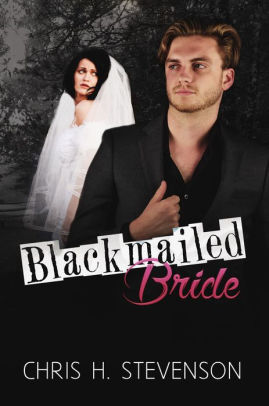
 Blackmailed Bride
 
 It's kind of funny when my agent called this book a romantic comedy. My publisher insisted it was a romantic thriller. I was convinced it was an erotic romance. I don't think any of us saw eye-to-eye on it; I just think we loved and believed in it from our own perspectives. I don't know what to call it---it has all of those elements. You can find it on B&N, Amazon, Goodreads, Smashwords, and many more retailers to come. If you read this book, please comment or email me and tell me what you think this is. Note: the humor element has to do with my style, I'm certain of that.


Book cover artist Ryan Barlow of Martha’s Vineyard is having a cigarette break in a church parking lot when a bride falls out of a tree and lands in his arms. Candace Sabella, a 27 year-old drop dead gorgeous pole dancer has just runaway from her marriage to her finance Antonio Madera, a porn king and ruthless killer. She begs Ryan to take her into his home and hide her. He relents, with dangerous misgivings. He discovers that this little gal is full of piss and vinegar and carries more baggage than a Carnival Cruise.


     Ryan can’t wait to get rid of Candace fast enough because he’s currently separated from his wife, Gloria, and attending marriage counseling. Gloria left Ryan to move in with her parents after suspecting that he committed adultery. She also believes he enjoyed a tawdry sex act with a floozy at his high school reunion. Besides that, she can’t stand the smell of his oil paints, alcohol and linseed oil. Yet Ryan and Gloria are a hair’s breath away from reconciliation.


     Candace, rightfully fearing for her life, will do anything to draw Ryan’s favor to her; including stripping for a portrait, spiking his food with aphrodisiacs, performing risqué dance routines, openly flashing him and trying to sleep in his bed. Ryan, with his Christian upbringing, is forced to use desperate measures to fight off her provocative advances. His arsenal includes a savage masturbation episode, shows of temper tantrums and even prayers. Strippers and pole dancers are worthless trash, he keeps telling himself. His mother had taught him that even though he’d visited some clubs in his younger days. Yet this petite little gal begins to soften his heart and show him another side of life that he never knew existed.


Gloria discovers Candace in her home with Ryan and storms off, threatening to sue him for everything he has. 


Antonio has put his entire Mob Squad on the hunt for his runaway bride because she saw him commit a murder and he needs to silence her. Antonio closes in on her location, forcing Ryan and Candace to pack their survival bags and run to a hideout in the bluffs for six days. During this time Ryan finds out that he is smitten and hopelessly in love with Candace and vows to protect her at all costs. Bouts of intense passionate lovemaking seals their pact and they fall more deeply in love with each other.


     With the help of friends, Ryan and Candace escape on a shrimp trawler and are accosted by Antonio Madera on the high seas. A donnybrook fight ensues. Ryan and his friends are victorious, but the love of his life is shot through the chest during the end moments of the fight. He has no idea whether she will live or die, and he’ll do anything to be with her until the critical outcome.

NEW: BLACKMAILED BRIDE: https://www.amazon.com/Blackmailed-B...ckmailed+bride


 https://www.amazon.com/Blackmailed-Bride-Chris-H-Stevenson-ebook/dp/B07JDP1Z7X/ref=sr_1_5?ie=UTF8&qid=1539902629&sr=8-5&keywords=blackmailed+bride


Sunday, September 30, 2018

Writing the Sexy Stuff


Got an author's copy of my new romance book today.--pretty little thing, I have to say, but it's not only my first romance, but it is my first flaming hot and very graphic tome. I'm a virgin male author barging in on this popular genre. An Internet GF (which I sought out) contributed to the physical and emotional aspects between the lead characters, and we really ripped the seams open. And that was because we both researched the "how to of it" and read several romance and erotica books before we even started. I had never even read a romance book of any kind in 28 years.


We both emailed each other over and over again, laying down the dreams and fantasies of our genders, with an obvious main focus on true love with an HEA ending. I was really frightened of love scenes, and turned fifty shades of pink during this process. My knees went limp thinking about what my female agent would say about this after she read it. I thought that I might be seen as a dirty, filthy pig.
   

I'll admit that we both got rather worked up over this topic for months, and this fevered pitch really added to the excitement and discovery in the story-line. 

Hell, I think erotica is 75% foreplay before anything happens, and there is a way to write a sexy narrative tease so that you have your reader panting and white-knuckling their fists—aching and anticipating some kind of volcanic release (which they know is there but can’t see), until it starts to tear them apart. If they end up cussing and ripping pages, you’ve done your job.  
 

Speaking from a male perspective, I knew that I was going to need more than a little help--a straight leg-up opinion and advice from the female side. And THAT was a huge, huge highway to discovery for me—oh, did I ever learn a ton about the female mindset—feelings of intimacy and passion. Although my book is not a straight erotica, it is rated four out of five flames.


Just saying, I got lucky, went to bat and got a good hit. I’ll find out if it is out of the park when it finally comes out. My two cents:


Partner up, if you’d like

Research—read these books

Don’t be afraid

Experiment and have a blast.


Saturday, May 13, 2017

The Amazon Monster

I just got this notice email from my publisher Denise Camacho at Intrigue publishing. I have to say that it is no surprise to me. I've also heard about Amazon monopolizing the industry in slow increments. And what's this about Amazon attempting to buyout Barnes & Nobel or take over their stores in some type of merger? Has anyone heard of this? I've seen this on YouTube video discussions. (Sorry that the Amazon page visuals didn't come through--that was for security reasons).

                                                 *                          *                        *

HELLO AUTHORS, 

I am sending you all a recent announcement I received from IBPA (Independent Book Publishers Assoc.)
This will impact everyone, including all of the major publishers, all self-published authors etc. Anyone who is trying to sell books on Amazon will be impacted.


On March 1, Amazon enacted a policy change that allows third-party sellers to compete for the Buy Box for books in “new condition.”

In case you’re not visualizing the Buy Box in your mind, it is this:

And, here it is on the right side of the screen next to a book’s description:

When you go to a product page on Amazon, the ADD TO CART Buy Box is the default offer. Other used options fall below the Buy Box. Where books are concerned, the default Buy Box has always belonged to the publisher. When you buy a book, Amazon pays the publisher 45% of the list price. This means your purchase is supporting the entity that published the book, namely the publisher, and authors are making a profit (albeit small) every time you buy because the publisher is paying an author royalty for each sale.

Now Amazon is giving that priority spot to third-party sellers, relegating the publisher button to a far less favorable position, below the landing page screen line, often last in a list of third-party sellers offering the book for a significantly lower cost in addition to free shipping. See the following example:


The Independent Book Publishers Association (IBPA) believes Amazon’s policy change, allowing third-party sellers to compete for the Buy Box for books in “new condition,” hurts authors and publishers. Here’s why:

Amazon, once again, is attempting to drive down the value of books, and therefore intellectual property and creative work in general. Under the new policy, Amazon is rewarding the seller that conforms to its rules (“competitive pricing”) by granting them the coveted Buy Box. Often this means dropping the publisher listing, and it’s not unlikely that publisher listings may fall off the buy page completely—at Amazon’s discretion.
When a book is not obviously for sale by its publisher on Amazon, the author may not be making royalties. Although for now it seems that publisher listings are on Amazon, it takes a savvy consumer to even understand what they’re buying—and most will go for the lowest-cost item, especially if it’s in the coveted Buy Box position.
While in some cases authors may still be making royalties off of third party sales, these sellers may also be obtaining books in ways that will not result in author compensation.
They might be a used bookstore that cheaply buys stock back from consumers.
They might troll book bins where people recycle books.
They might have relationships with distributors and wholesalers where they buy “hurts” (often good enough quality to be considered “new condition”) at a super low cost.
They might have connections to reviewers who get more books than they can handle and are looking to offload.
And on and on.
In all cases above, the books sold on Amazon would not qualify as sales for the purposes of author royalties because they’ve already been sold, or originally existed as promotional copies. And even for those third-party sellers buying books through wholesale channels, the question arises of how Amazon is measuring “new condition.”

If consumers don’t see the option to buy new, from the publisher, then Amazon is promoting piracy. Authors get nothing from used books because the consumer is buying something that’s already been bought and tracked as a sale. If this new policy takes hold for most backlist books, authors’ and publishers’ revenue will dry up, and more and more books are at risk of going out of print more quickly. Publishers will not be able to afford to keep books in print that are not selling on Amazon. So, this policy is essentially driving books to an earlier death—and thereby hurting authors.

Amazon suggests that one of the ways you can win the Buy Box is to keep books “in stock.” This poses a major problem for self-published authors and any backlist author whose books are print-on-demand. Print-on-demand automatically means there’s no stock. The books are printed to order. If Amazon is penalizing books that are set up as POD titles and favoring third-party sellers who have stock due to any of the abovementioned means of procurement, authors will again be dinged when their own listing, or publisher listing, ranks low on the list of “Other Sellers on Amazon.” We can only suppose that Amazon will not penalize or remove books that are listed with CreateSpace—and as Amazon moves away from CreateSpace to consolidate its print and e-book self-publishing program onto Kindle, it will be interesting to note how often those books get the coveted Buy Box position for doing business with Amazon.

If indie publishers can't get into bookstores and are being cut off at the knees by Amazon-induced piracy, then the future is grim indeed. As a community of indie publishers, we should be very bothered by this new policy. Amazon is a mammoth player in the publishing space and it can do much to either help or hurt the publishing industry. Their new third-party seller policy is potentially terrorizing, in that it is likely to result in publishers selling fewer copies and ultimately being forced to declare backlist books out of print.


Scenario 1

In April 2017, the publisher of SparkPress was emailed by an author who said her book was no longer being listed on Amazon—at all—as available from SparkPress. When one typed in the title of her book, the only listings that came up were from third-party sellers. Amazon’s policy states that “eligible sellers will be able to compete for the buy box,” but in this case, SparkPress had been completely wiped off Amazon as an eligible seller in any capacity, without being notified.

Scenario 2

Seal Press’s Second Wind by Cami Ostman experienced the same scenario. When you click on the product page for Second Wind, here’s what you see:


Note the paperback price: $3.23. Note the seller: Meadowland Media. At first glance, Seal Press’s listing could not be found, but it turned out to be there, just four buttons down and below the sight line of the landing page.

One must assume Meadowland is selling a used book as “new condition” in this scenario. Why? If they were purchasing the book wholesale they would have paid as much as 60% off the list price. So, they would have bought the book for $6.80. The only logical conclusion is that this seller is selling a used book, or a book they got for free in some capacity.

The impact this scenario could have on publishers’ backlist (typically meaning any book that’s six months or older) is devastating, especially because consumers don’t understand what’s going on here. When you search for this book, it looks as if the only listing that’s available is through Meadowland Media because the search function leads to a page where the only visibility you have is that Second Wind is $3.23. This screen shot says that there are “more buying options” but those buying options alert you to the 25-cent copy, not the copy being sold by the publisher for $10.62.


Small publishers are dependent on backlist sales for their livelihood. Amazon is a Herculean player when it comes to backlist sales because bookstores favor front-list books. If you’re looking for a book that’s a year old or more, you’re likely to go to Amazon to find it. Second Wind was published in 2010, but the way Amazon has set up this listing, it’s as if the book were out of print with the publisher. It’s not.